
Choosing the correct IWB holster for you!
Choosing the Correct IWB Holster for You Finding the Right Inside-the-Waistband Holster Doesn’t Have to Be Complicated If you’ve ever
 Skip to content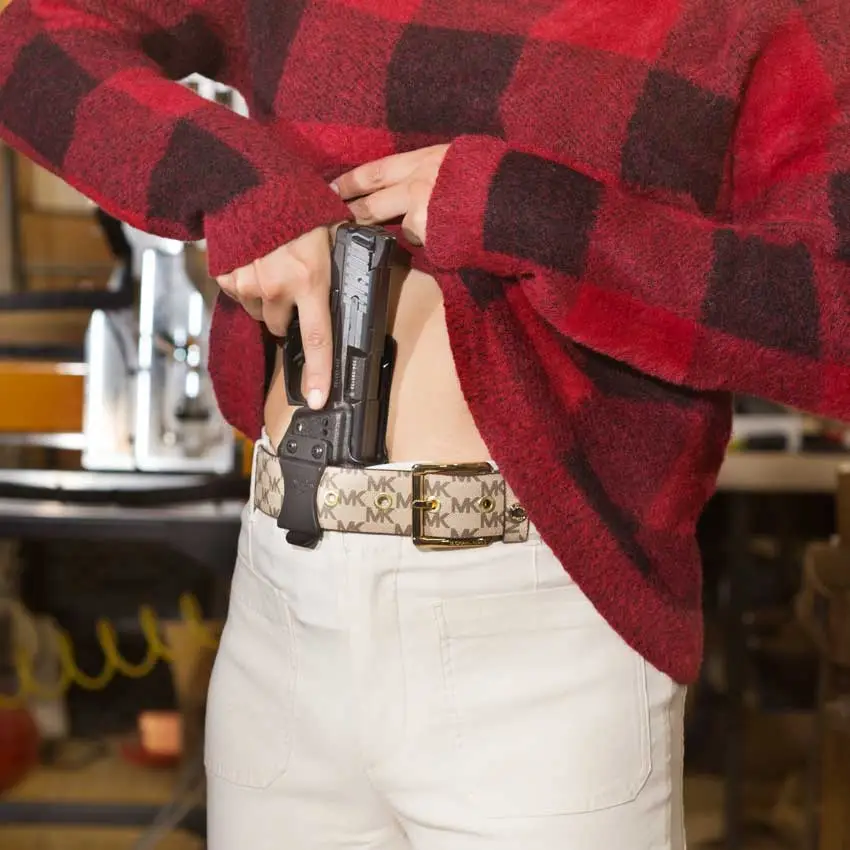
A Professional Guide for Everyday Carry
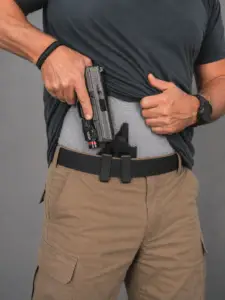
Concealed carry is built on one simple principle: discretion. How to avoid printing while carrying is a skill you learn with practice. The effectiveness of carrying a firearm for personal defense relies heavily on your ability to keep it unseen. “Printing” the visible outline of a firearm through clothing is one of the most common challenges faced by those who carry daily. Whether you’re new to concealed carry or have years of experience, managing and minimizing printing is essential for both safety and confidence. The grip is what we are trying to hide.
At MK-Tek Holsters, we understand that successful concealed carry is not just about having the right firearm it’s about the complete system: holster design, clothing choices, positioning, and awareness. This guide breaks down exactly how to avoid printing and carry with confidence in any environment.
Printing occurs when the shape or outline of your firearm becomes visible through your clothing. It can be subtle, like a grip slightly protruding under a shirt, or obvious enough that others recognize you’re carrying. A bulge on your hip is a tell tale sign that you have something on your hip.
Why does this matter?
Avoiding printing is not about paranoia it’s about control and professionalism in how you carry.
The single most important factor in preventing printing is your holster.
A well designed concealed carry holster should:
Poor holster design often leads to unnecessary bulk, awkward angles, and increased printing. The read more about choosing a holster that is best for you, continue with this article.
Kydex holsters like those crafted by MK-Tek Holsters offer a major advantage:
Unlike soft holsters that can collapse or shift, Kydex maintains its structure, keeping your firearm in a predictable position throughout the day. That consistency directly reduces printing.
Your carry position plays a massive role in concealment. Even the best holster will print if it’s placed incorrectly for your body type. We see it all the time.
Printing risk: The grip can push outward if the holster lacks proper concealment wing or tuck n roll features.
Printing risk: The grip tends to “wing out,” especially when bending or twisting.
Printing risk: Can become visible when reaching or leaning forward.
There is no universal “best” position only what works best for your body and lifestyle. The goal is to find a position where the firearm naturally follows your body’s contours instead of fighting against them.
Modern concealed carry holsters incorporate features specifically designed to reduce printing.
A concealment wing pushes against the inside of your belt, rotating the grip of the firearm inward toward your body. This is one of the most effective ways to eliminate grip printing.
A Tuck n Roll sits between the holster and your body, tilting the muzzle outward slightly while pushing the grip inward. This improves both comfort and concealment. Our Tuck n Roll is offered on some holster models as a built in feature.
Fine-tuning how high your firearm sits and at what angle allows you to dial in concealment. Even small adjustments can make a significant difference. Straight cant for Appendix Carry, 15 degree cant for behind the hip carry
You don’t need to overhaul your wardrobe to carry effectively but you do need to be intentional.
The ideal fit is somewhere in between structured but not restrictive.
Solid colors tend to show shadows and outlines more clearly. Patterns break up visual consistency, making printing harder to detect.
These are all excellent choices for concealed carriers.
Thicker, more structured fabrics conceal better than thin, clingy materials.
Layering is one of the easiest ways to reduce printing:
Even a light outer layer can dramatically improve concealment.
A proper gun belt is critical. Standard belts are not designed to support the weight of a firearm, which leads to sagging and shifting both of which increase printing.
A quality gun belt should:
When your belt fails, your entire carry system fails. We like to recommend Kore Essential belt or Blue Alpha Belts
No two people carry the same way. Your body type will influence how your firearm prints.
Solution: Use a concealment wing or claw and consider appendix carry for better concealment.
Solution: Focus on proper holster positioning and clothing fit.
Solution: Use our Tuck n Roll or wedges and experiment with carry positions for all-day wearability.
Printing doesn’t just happen when you’re standing still it often occurs during movement.
Be mindful of:
Instead of bending at the waist, bend at the knees. Instead of reaching high with one arm, adjust your positioning. Small changes in movement make a big difference.
Your concealment strategy should evolve with the seasons.
Tips:
Tips:
One overlooked factor in printing is behavior.
Constantly adjusting your holster, tugging at your shirt, or checking your firearm draws attention even if you’re not printing. Nobody is staring at your crotch.
Confidence comes from:
When your system is dialed in, you won’t feel the need to constantly check it.
Before carrying in public, test your setup thoroughly.
Have someone you trust give honest feedback. A second set of eyes often catches what you miss.
Avoid these frequent errors:
Each of these issues compounds the problem and each is easily corrected with the right approach.
Avoiding printing isn’t about one single fix. It’s about building a complete, reliable system that works together:
When all of these elements align, concealment becomes second nature.
At MK-Tek Holsters, we design holsters with real-world concealed carry in mind focused on accessibility, comfort, durability, and low-profile performance. Because when your gear works the way it should, you stop thinking about it and that’s exactly the point. Additional Blog posts on Concealed Carry
Printing is not an unavoidable problem it’s a solvable one. Avoid printing while carrying is a skill that can be learned.
With the right setup and attention to detail, you can carry confidently in virtually any environment without drawing unwanted attention.
Refine your system. Test your setup. Carry with purpose.
And most importantly stay concealed. The best handgun is the one you have with you.
Choosing the Correct IWB Holster for You Finding the Right Inside-the-Waistband Holster Doesn’t Have to Be Complicated If you’ve ever
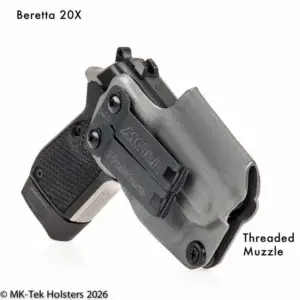
Beretta 20X IWB Holster: The Complete Guide to Comfortable and Reliable Concealed Carry Why the Right Beretta 20X Holster Matters
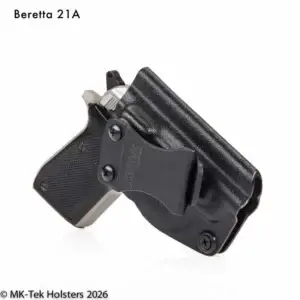
Beretta 21A Bobcat Holster The Beretta 21A Bobcat has earned a loyal following over the years for one simple reason.
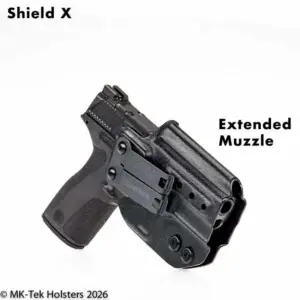
Smith and Wesson M&P Shield X Holster & Carry Comp Performance with MK-Tek Holsters: A Technical Breakdown for Serious Everyday
 Optimized by Seraphinite Accelerator